Introducing
the World Commission
on Fossil Fuel Phase Out
───
The Commission Project convened this day to showcase some of the people and ideas that could be featured in the World Commission of Fossil Fuel Phase Out. The core team of the Commission Project includes Steve Kretzmann, Kairn Carrington, dipti bhatnagar and Madhuresh Kumar.
Led by Kairn Mahon Carrington of The Commission Project, the event featured voices like Colombian Environment Minister Susana Muhammad Gonzalez, Indigenous leader Tom Goldtooth, former UK MP Chris Skidmore, and Goldman Prize winners Makoma Lekalakala and Sharon Lavigne, and Brazilian Parliamentarian Célia Xakriabá.
Please scroll through these memories of this extraordinary day that gathered more than 250 policy makers, government officials, activists, movement leaders, trade union representatives and academics to discuss the critical question of how to phase out fossil fuels with justice and equity.
Introducing the World Commission on Fossil Fuel Phase Out
───
“The World Commission on Fossil Fuel Phaseout is more than just a plan; it’s a call for global cooperation to protect what we love and address the power imbalances stalling our progress.”
— Kairn Mahon Carrington
Introducing the World Commission on Fossil Fuel Phase Out
───
“Corporations and powerful interests are enriched in the North, while they justify ongoing expansion through deceptive nationalistic arguments, manufactured demand, and decades of well documented climate denial. The fossil fuel industry is neither willing nor able to wind itself down.”
— Steve Kretzmann
The conference focused on identifying the barriers to fossil fuel phase out and developing pathways to facilitate a timely and equitable energy transition. Speakers acknowledged the ongoing colonization of Indigenous communities, with the fossil fuel industry at the forefront of environmental destruction, pollution, and conflict. Others highlighted the urgent need to transition from fossil fuels while ensuring equity, justice, and public health, with figures like Kumi Naidoo of the Fossil Fuel Non-Proliferation Treaty Initiative and Lujain Alqodmani of the World Medical Association, emphasizing the collective strength needed for immediate action. The event underscored the growing momentum for meaningful change, despite the complex barriers still standing in the way of a global phase-out.
Barriers and Bridges: What are the main legal, financial and political challenges and pathways to the fossil fuel phase out?
────
"While planning this conference, we knew that not many people could get to New York, so we held mini consultations across the world, modelling what a robust consultative process of the World Commission on Fossil Fuel Phase Out could look like. We conducted over 1000 conversations with individuals, small groups, in webinars and at large in-person gatherings. One significant step on the way was the Maputo Meeting on Corporate Impunity and Human Rights in mid-August, where we held a workshop on fossil fuel phase out. This was done by 2 part-time people over a year and a bit. So imagine the possibilities. This is the promise the World Commission on Fossil Fuel Phase Out holds, making space for the beauty of our conversations."
— dipti bhatnagar
Towards a Fossil Fuel Free Future:
Diplomatic perspectives on moving forward
Yusuf Hussain | Climate Finance Lead-Office of the special Envoy for Climate Change in the Executive Office of the President of Kenya
Hon. Rosa Galvez | Senator (Canada)
Moderated by Mohammad Adow | Power Shift Africa
───
Yusuf Hussain:
Many nations are particularly vulnerable to climate change, despite having contributed little or nothing to the crisis. There is a need for international support, innovative financing, technology transfer, and capacity building to enable African countries leapfrog fossil fuel dependence and move directly to renewable energy. Kenya's own renewable energy initiatives, particularly in geothermal and solar energy, are examples of successful transitions.
Towards a Fossil Fuel Free Future: Diplomatic perspectives on moving forward
───
"Canada is the only country of the G7 that has not attained its climate goals.”
— Hon. Rosa Galvez
Hon. Rosa Galvez:
Parts of the Canadian Arctic are warming 2-5 times faster than the global average. As a resource-rich nation with a strong oil and gas sector, Canada faces internal challenges in balancing economic interests with its international climate commitments. Climate change fight should be a whole-of-government, whole-of-society approach. Canada has progressed in reducing emissions and promoting clean energy technologies, but there are political and social hurdles in phasing out fossil fuels. At a minimum, we all should have access to democratic rights, justice, education, clean air, water and soil.
Towards a Fossil Fuel Free Future: Diplomatic perspectives on moving forward
───
Mohammed Adow:
Africa and Latin America were colonized not because they were poor, but because they were rich. Last year, the world invested 1.8 trillion in renewables but the continent of Africa received only 3 percent of that investment.
Attacking the barriers
to a fair fossil fuel phase out
Sivan Kartha | Stockholm Environment Institute
───
“Phasing out fossil fuels is as much a question of fairness as it is of feasibility — without a focus on equity, the transition will fail.”
— Sivan Kartha
Global Inequities:
Wealthy, Global North countries, which have contributed most to emissions, bear a greater moral and legal responsibility to phase out fossil fuels and support the Global South with financial and technical assistance.
Economic Dependence on Fossil Fuels:
Global South nations rely on fossil fuels for economic growth, making it difficult for them to transition to renewable energy without a comprehensive plan for economic diversification and just transitions for affected workers and communities.
Political and Institutional Resistance:
Resistance from powerful fossil fuel interests that undermine climate policies and called for stronger regulations, criticizing current government reliance on market forces to drive change.
Financial and Technological Barriers:
It is critical to reform International financial institutions to prioritize investments in clean energy infrastructure and capacity building, especially in low-income countries facing significant access barriers.
Just Transitions:
A fair phase-out of fossil fuels must include policies that provide retraining, social protections, and economic opportunities for workers and communities dependent on the industry.
Perspectives from the Front Line:
Community leaders pushing back
against fossil fuel expansion
Tom BK Goldtooth | Indigenous Environmental Network (USA)
Makoma Lekalakala | Earthlife Africa (South Africa)
Sharon Lavigne | Rise St. James (Louisiana, USA)
───
"Fossil fuels desecrate our sacred lands, our waters, our people; this is not just about policy, it’s about survival."
— Tom BK Goldtooth
Tom BK Goldtooth:
There is a long history of Indigenous resistance to fossil fuel projects in North America, particularly in the context of Indigenous sovereignty and the defense of sacred lands where there is a disproportionate impact of fossil fuel extraction and pollution on Indigenous communities (often referred to as "sacrifice zones"). There is a need for recognizing Indigenous rights and traditional knowledge in the fight against climate change. Indigenous peoples have been on the front lines of environmental protection for centuries. As well as for systemic change, a shift from extractive economies to regenerative, community-led solutions that prioritize environmental and social justice. The colonial mechanisms of geoengineering, manipulation of the stratosphere, market mechanisms, counting the carbon in the trees, etc, are destroying the spiritual relationship and cosmos vision of Indigenous peoples.
Perspectives from the Front Line: Community leaders pushing back against fossil fuel expansion
───
"Africa’s transition must be for the people, driven by the needs of our communities rather than profits."
— Makoma Lekalakala
Makoma Lekalakala:
In South Africa, communities have been resisting coal and other fossil fuel projects threatening their health, environment, and livelihoods. They are an integral part of the Life After Coal campaign. A disproportionate burden placed on marginalized communities, especially women, who often bear the brunt of the increasing environmental degradation. People are faced with situations where they find themselves suffocating, unable to breathe, their water being polluted, and their livelihoods compromised. The corporations and financiers are disregarding human life. Activism and legal challenges play an important role in blocking fossil fuel projects, notably Earthlife Africa's successful legal battle to halt a proposed nuclear deal in South Africa, which would have deepened the country's reliance on non-renewable energy. There needs to be greater solidarity among grassroots movements globally, and an emphasis on the importance of people-powered resistance in the face of government and corporate interests aligned with fossil fuel expansion.
Indigenous Testimonial:
Artistic Representations from the South Pacific
- This is Our Home
────
"This is our home, and we won’t stand by as it slips into the sea. We are resilient, but resilience has its limits."
Musicians from the group This is Our Homeshare storytelling through music born out of the profound relationship between Indigenous peoples and their land, ocean and culture. They speak of the threats posed to their entire way of life, both by climate change and continued fossil fuel extraction. The notion of "home" is not just a physical space but a sacred relationship with nature, which has been sustained for generations.
Pacific Island nations are subject to the disproportionate burden of climate change due to fossil fuel-driven climate change, and the existential threat posed to their homes, livelihoods and cultures.
Barriers and Bridges:
What are the main legal, financial and political challenges and pathways to the fossil fuel phase out?
Fadhel Kaboub | Power Shift Africa
Nikki Reisch | Center for International Environmental Law
Ozzi Warwick | General Secretary, Joint Trade Union Movement of Trinidad and Tobago
Lujain Alqodmani | President, World Medical Association
Moderated by dipti bhatnagar | The Commission Project
────
"The transition will fail if it remains financially out of reach for the Global South. Fairness in funding is key to making any global goals achievable."
— Fadhel Kaboub
This session moderated by dipti bhatnagar of the Commission Project, delved into the main legal, financial, and political challenges, as well as potential pathways, to achieving a fair and effective phase-out of fossil fuels.
Barriers and Bridges: What are the main legal, financial and political challenges and pathways to the fossil fuel phase out?
────
"Our economies must be able to transition without plunging into debt, and that requires a financial system that supports justice, not exploitation."
— Fadhel Kaboub
Financial Barriers and Opportunities
Fadhel Kaboub | Power Shift Africa
Fossil fuels in the global south have not delivered energy security, nor development or prosperity. The colonial role still imposed on Africa as a cheap raw material source with obsolete technologies, and consumer of the north’s industrial output is still sold to Africans under the guise of development and job creation. The fossil fuel industry is the energy system of the past, we must ensure we do not entrench the same predatory hierarchies as African countries transition to the new energy system.
By 2040, with existing renewables technology, Africa can produce 1,000 times its anticipated energy needs. Yet Africans are being denied access to the technology to use their own critical minerals to manufacture and deploy the renewables infrastructure to unleash that potential.
Barriers and Bridges:
What are the main legal, financial and political challenges and pathways to the fossil fuel phase out?
────
"Legal frameworks must evolve as quickly as the crisis; otherwise, we’ll always be fighting from behind."
— Nikki Reisch
Legal Challenges and Pathways
Nikki Reisch | Center for International Environmental Law
Existing legal frameworks often favour the fossil fuel industry, through subsidies, liability protection, and extensive legal rights. Barriers include long-term contracts that lock countries into fossil fuel use and the legal challenges posed by transitioning away from these agreements. Investment law, specifically the investor state dispute settlement (ISDS) regime, are being weaponised by the fossil fuel industry to discourage delay and demand payment for fossil fuel phase out. Governments have legal obligations under human rights laws and environmental law, but when they take action to protect people and planet as part of their obligations, or even consider it, they face threats of being sued by foreign investors for large sums of money.
An extensive and undemocratic system of bilateral and multilateral treaties contain clauses allowing foreign investors to bring suit against governments when they take regulatory action that supposedly affects the investor returns. There is a need to take a whole of fossil economy approach, including downstream sectors like petrochemical and agrochemical sectors that drive up demand for oil and gas production. Two other significant barriers to the fossil fuel phase out are rating agencies and regulations taxonomies. Rating agencies have been downgrading countries that speak up for phase out. Taxonomies that define clean alternatives include false solutions like carbon capture and hydrogen, which are designed to entrench dependence on fossil fuels. The law can also be a force of good, with one bright spot being an uptick in litigation against the fossil companies around the world, which is an important tool to compel internalising the real cost of fossil fuels.
Barriers and Bridges: What are the main legal, financial and political challenges and pathways to the fossil fuel phase out?
────
"A just transition means securing the future and dignity of workers—not leaving them to bear the costs of change alone."
— Ozzi Warwick
Labor and Political Dynamics
Ozzi Warwick | General Secretary, Joint Trade Union Movement of Trinidad and Tobago
Any action in this phase of the energy transition must be just, fair, and equitable, particularly when deciding which countries should phase out fossil fuels first. Eighty percent of Trinidad and Tobago’s foreign exchange earnings come from oil, which funds essential services like hospitals, schools, and public infrastructure.
Capitalism’s relentless drive for profit perpetuates the expansion of energy production. There is a need for public ownership of energy systems and the elimination of the profit motive. Protecting the planet also means safeguarding the livelihoods of everyday people who depend on fair and stable economic systems to support their families.
Barriers and Bridges:
What are the main legal, financial and political challenges and pathways to the fossil fuel phase out?
────
"Health is inextricably linked to climate action; every delay costs lives."
— Lujain Alqodmani
Health and Ethical Considerations
Lujain Alqodmani
Each year, 8.1 million adults die from air pollution alone, excluding fatalities from other toxins and harmful chemicals. Severe, inter-generational health impacts of fossil fuel use disproportionately affect marginalised populations in low and middle-income countries.
Devastating health consequences of fossil fuel dependence create an undeniable moral and ethical imperative for immediate action and robust commitments.
What’s Stopping Us?
A UK Perspective
Rt Hon Chris Skidmore OBE | Member of Parliament from 2010 to 2024 (UK)
In conversation with Baronness Bryony Worthington | Crossbencher, House of Lords (UK)
────
"This is not about being green for the sake of it; this is about economic survival and ensuring a livable future."
— Rt Hon Chris Skidmore OBE
This session featured a conversation between Rt Hon Chris Skidmore OBE, a former Member of Parliament, and Baroness Bryony Worthington, a crossbencher in the House of Lords. They explored the UK's barriers to phasing out fossil fuels, focusing on political, economic, and social challenges, while also considering the potential for positive change.
What’s Stopping Us?
A UK Perspective
────
Rt Hon Chris Skidmore OBE | Member of Parliament from 2010 to 2024 (UK)
In conversation with Baronness Bryony Worthington | Crossbencher, House of Lords (UK)
Political Will and Policy Gaps
Political hesitation and inconsistent policy direction have slowed the UK's progress toward fossil fuel phase-out. Despite the UK’s commitment to ambitious climate goals, there has been a lack of clear, long-term planning and cross-party support for bold action on fossil fuels. Political instability and leadership changes have further complicated the consistency needed for effective climate action, with policies sometimes undermined or reversed based on shifting political priorities.
What’s Stopping Us?
A UK Perspective
────
Rt Hon Chris Skidmore OBE | Member of Parliament from 2010 to 2024 (UK)
In conversation with Baronness Bryony Worthington | Crossbencher, House of Lords (UK)
Economic and Infrastructure Challenges
Industries heavily dependent on fossil fuels, such as energy, transport, and manufacturing, face particular difficulties. There is a challenge in creating incentives for businesses and ensuring that the green transition is economically viable for all sectors. While there is a need for significant infrastructure investment, especially in renewable energy and the electrification of transport, the economic benefits of these shifts may take time to materialize.
Opportunities for Leadership and Innovation
The UK has significant potential to lead in the global phase-out of fossil fuels, thanks to its early commitments to net-zero targets and renewable energy projects, such as offshore wind. It is hoped that the new government will demonstrate leadership by aligning its domestic policies with international climate goals, reinforcing its global influence on climate action, and exporting solutions to other nations.
Summary
This conversation between Chris Skidmore and Baroness Bryony Worthington explored the political, economic, and social factors that have slowed the UK’s fossil fuel phase-out. Political instability, economic challenges, and public perception have hindered progress, but both speakers also recognized the UK’s potential to lead by example and innovate in clean energy. They emphasized the importance of clear policy direction, public engagement, and infrastructure investment to overcome these barriers and accelerate the transition to a fossil-free future.
Government Perspectives:
Political and Economic Challenges
of Stopping Fossil Expansion
Hon. Susana Muhamad González | Minister of Environment and Sustainable Development (Colombia)
Ambassador Liliam Chagas | Director for Climate, Brazilian Ministry of Foreign Affairs (Brazil)
In conversation with Akshat Rathi | Bloomberg News
────
This panel brought together Hon. Susana Muhamad González, Colombia's Minister of Environment and Sustainable Development, and Ambassador Liliam Chagas, Director for Climate at the Brazilian Ministry of Foreign Affairs. The conversation focused on the complex political and economic obstacles these Latin American nations face in halting fossil fuel expansion while transitioning to sustainable energy systems.
Government Perspectives: Political and Economic Challenges of Stopping Fossil Expansion
────
"For Colombia, stopping fossil fuel expansion is not only an environmental issue; it’s about protecting our communities and way of life."
— Susana Muhamad González
Balancing Development and Climate Action
There is tension between the urgent need for economic development and the imperative of addressing the climate crisis.
Colombia’s reliance on oil and coal exports for 10% of its GDP, which fund essential government programs. However, the country is demonstrated to phasing our fossil fuels and has created an investment portfolio for the Colombian transition despite these dependencies.
Similarly Brazil has the dual challenge of promoting development while protecting the Amazon, a critical global carbon sink. Brazil's extensive biodiversity and natural resources, are vital for the global climate but also subject to pressures from agriculture, energy production, and industry.
Challenges of Phasing Out Fossil Fuels
There is significant opposition to Colombia’s intentions to phase out fossil fuels. Without substantial international support and financial assistance, the pace of transition will be slowed or stalled.
Brazil is working on strategies to reduce its dependence on fossil fuels, which is 15% of GDP and faces challenges due to entrenched interests in the oil sector and political pressure to prioritise economic growth.
Government Perspectives: Political and Economic Challenges of Stopping Fossil Expansion
────
"The Amazon is not just Brazil’s responsibility; it’s a global resource and a global responsibility."
— Liliam Chagas
International Support and Financing
There is a need for international financing to support developing countries like Colombia and Brazil in their energy transitions.
Colombia is paying 10% for access to capital while developed world pays 1-2%. The country is highly indebted, due to COVID and price of access to capital. Columbia is paying 50% of that debt in interest, and annually they pay more on the external debt than the country’s defence or education budget. International cooperation is critical, noting Brazil’s role in advocating for payments for ecosystem services.
The world benefits from Brazil’s stewardship of the Amazon, but the country does not receive adequate financial compensation for these environmental services. There is a real political risk for any government that jeopardizes energy security.
Role of Governance and Policy Innovation
Who is governing here? The market or the governments? Colombia’s commitment to innovative climate policies, such as halting new oil exploration licenses, signals a political shift despite economic challenges. Without the necessary political will and economic support, implementing these policies will remain difficult. The world is based on international financial structures for a brown economy. These structures must shift to support a truly green global economy. economy. It’s unrealistic to think we will have a clean future with the financial and economic structures from the past.
Summary
This panel explored the political and economic challenges faced by Colombia and Brazil as they attempt to phase out fossil fuel expansion while ensuring economic development. Hon. Susana Muhamad González and Ambassador Liliam Chagas acknowledged the economic dependence on fossil fuels in their respective countries, stressing that international financing, policy innovation, and global cooperation are essential to accelerate the transition to clean energy. Both speakers emphasized the need for political leadership and greater international support to overcome the challenges of moving toward a fossil-free future, while balancing the developmental and environmental needs of their countries.
Parliamentarians
for a Fossil Free Future
Hon. Célia Xakriabá | Federal Deputy of the Brazilian Congress (Brazil)
Dinah Fuentesfina | Parliamentarians’ Network for a Fossil-Free Future
────
"Our resistance isn’t just against fossil fuels; it’s about reconstructing our connection to land and life. That takes time and patience."
— Célia Xakriabá
Indigenous Perspectives and Leadership
Hon. Célia Xakriabá | Federal Deputy of the Brazilian Congress (Brazil)
Indigenous communities play an important role in protecting biodiversity and the Amazon. Respecting indigenous knowledge and leadership is important in the fight against fossil fuel expansion. Communities fight not only to end exploitation, but also for healing and rebuilding.
Parliamentarians for a Fossil Free Future
────
Political Will and Legislative Action
Dinah Fuentesfina | Parliamentarians’ Network for a Fossil-Free Future
Parliamentarians play a critical role in driving fossil fuel phase-out legislation. The network of Parliamentarians for a Fossil Free Future boasts over 900 Parliamentarians from 95 countries. The network is building global alliances among lawmakers who represent the electorate to ensure coordinated action and create policies that prioritise the shift to clean energy. There is a call for greater political will and for governments and legislatures to act decisively to end fossil fuel dependency.
The Way Forward:
How can we work together to
accelerate the fossil fuel phase out?
Kumi Naidoo | Fossil Fuel Non-Proliferation Treaty Initiative
Farooq Ullah | International Institute for Sustainable Development
Madhuresh Kumar | The Commission Project
────
The Way Forward: How can we work together to accelerate the fossil fuel phase out?
────
"Pessimism is a luxury we simply cannot afford. If we want change, we must replace it with the optimism of our courage, creativity, and action."
— Kumi Naidoo
Urgent Action on Fossil Fuels
Kumi Naidoo | Fossil Fuel Non-Proliferation Treaty Initiative
There is an urgent call for the global community to come together and tackle the fossil fuel crisis. A just transition must include everyone, including the woman who sells vegetables outside of a coal mine, dependent on the mine running for her livelihood, else we will fail. The moment of history that we find ourselves in is one in which pessimism is a luxury we simply cannot afford.
The Way Forward: How can we work together to accelerate the fossil fuel phase out?
────
Financial Pathways and International Support
Farooq Ullah | International Institute for Sustainable Development
There is a need to overhaul the international financial system to better support clean energy transitions. Current structures often favour fossil fuel investments. Important elements include incorporating fossil fuel phase-out commitments into countries' Nationally Determined Contributions (NDCs) under the Paris Agreement and ensuring that financial support is available for countries making this transition.
The Way Forward: How can we work together to accelerate the fossil fuel phase out?
────
Building a Global Commission for Action
Madhuresh Kumar | The Commission Project
The project, purpose and process of the World Commission on Fossil Fuel Phase-Out; is a consultative process designed to bring together knowledge from the grassroots movements to policymakers, from academics to indigenous peoples. The Commission will focus on a robust consultative process to find pathways to facilitate a fossil fuel phase out.
From Crisis to Action:
Confronting the Fossil Fuel Industry
for a Healthy, Just Future
Shweta Narayan | Global Climate and Health Alliance
Kairn Mahon Carrington | The Commission Project
────
“We’re not just talking about the future; we’re talking about lives—real lives lost and harmed today, tomorrow, and generations down the line.
The climate crisis is a public health emergency.”
— Shweta Narayan
Shweta Narayan:
The devastating health impacts of fossil fuel extraction and use, highlight how the industry not only contributes to the crisis but directly harms public health through pollution. Air pollution, largely driven by fossil fuels, causes millions of premature deaths each year. We are not talking about a distant future, but about human lives being lost and harmed today, tomorrow, and for generations to come. This is even more than a climate crisis, it's a global public health emergency.
Within the $7 trillion in annual subsidies, 7% of global GDP that goes to fossil fuels, which is 2/3 of global healthcare spending. We're propping up an industry that is killing us, and it’s costing us as much as we're investing in protecting our health. This money should be redirected towards clean energy solutions and healthcare to create a more just and sustainable world.
The battle against the fossil fuel industry is not only a climate and health issue but a moral imperative. Policymakers, activists, and everyday citizens are being called upon to act courageously and urgently, confronting the industry’s harmful practices and pushing for a transition to clean energy. The need for a unified, bold response is a pathway to achieving a healthier and more equitable future.
From Crisis to Action: Confronting the Fossil Fuel Industry for a Healthy, Just Future
────
“The World Commission on Fossil Fuel Phaseout is more than just a plan;
it’s a call for global cooperation to protect what we love and address the power imbalances stalling our progress.”
— Kairn Mahon Carrington
Collective Power needs to be built for unity across movements, sectors, and regions to challenge the entrenched power of the fossil fuel industry.The Commission Project will serve as a vital platform for collaboration, consultations, accountability, and policy development, helping governments and communities articulate how to transition away from fossil fuels. The Commission aims to ensure that the phase-out is done in a just and equitable way, particularly for those most vulnerable to the impacts of climate change and fossil fuel extraction.
Final Call to Action:
The conference closed with a powerful message, optimism, courage, and urgency are essential to confront the fossil fuel industry head-on, to support policies that prioritise health and equity, and to continue building a movement that holds the industry accountable. The ultimate goal is a fossil-free, healthy, and just future, achievable through united and determined action.
Bridges and Barriers to Fossil Fuel Phase Out was co-hosted by an evolving group including: The Ford Foundation, Asia Pacific Movement on Debt & Development, Carbon Tracker Initiative, Indigenous Climate Action, Center for International Environmental Law, Climate & Community Project, Global Climate & Health Alliance, #GWL Voices, Oak Foundation, Power Shift Africa, Oil Change International, Parliamentarians for Fossil-Free Future, GreenFaith, The Fossil Fuel Non-Proliferation Treaty Initiative, Wallace Global Fund, Climate Action Network-International, New York Community Trust and The Commission Project.
SEPTEMBER 25, 2024
11:00-17:30
Thank you to all who attended!
Exploring perspectives and pathways towards a just, timely and equitable transition away from fossil fuels.
Despite the COP 28 decision to transition away from fossil fuels, oil and gas projects continue to grow, yet more are in development, and there is no plan for how to manage the decline of the fossil fuel sector.
Again and again, the question of why we must urgently phase out fossil fuels has been asked and tragically answered. The true costs of oil, gas, and coal are far too great, measured not only in greenhouse gas emissions, but in impacts on workers, our neighbors, our communities, our health, our lives, and our futures.
Voices of
Fossil Fuel
Phase Out
-
Sharon Lavigne is an environmental justice activist in Louisiana focused on combating petrochemical complexes in Cancer Alley. Lavigne worked as a special education teacher until deciding to dedicate herself full-time to working for environmental justice in her community. In October 2018, she founded RISE St. James, a faith-based, grassroots environmental organization that started with a community meeting in her living room. Now, she manages a small staff and some 20 volunteers. She is the 2022 recipient of the Laetare Medal, the highest honor for American Catholics, and a 2021 recipient of the Goldman Environmental Prize.
Lavigne is the daughter of civil rights activists and has lived in the St. James Parish, Louisiana community her whole life. As a little girl, her family lived off the land—with gardens, cattle, pigs, and chickens—and her grandfather caught fish and shrimp in the Mississippi River.
-
Dr Tzeporah Berman BA, MES, LLD (honoris causa) has been designing climate justice and environmental advocacy campaigns and advising governments for over 30 years. She is the Cofounder and International Program Director at Stand.earth and the Chair and Founder of the Fossil Fuel Non-Proliferation Treaty Initiative. Tzeporah publishes and speaks widely on fossil fuels and climate change. She is the author of This Crazy Time: Living Our Environmental Challenge, published by Random House. For six years she was the Executive Director of the Tarsands Network tasked with developing strategies for pipeline and tarsands campaigns and related grant dockets for philanthropic foundations. She has also held positions advising the British Columbia government and in Alberta Co-Chairing the Oil Sands Advisory Working Group tasked with making recommendations to implement climate change policy in the oilsands. For two years Tzeporah was the co-director of Greenpeace International's global climate program during which she successfully oversaw campaigns to stop oil drilling north of the sea ice line in Greenland, a campaign against Volkswagen to get support for vehicle efficiency laws and a successful campaign to get Facebook to become the first IT company in the world to have a procurement policy for renewable energy. Tzeporah is one of the primary negotiators and architects of the Great Bear Rainforest campaign in Canada that led to the permanent protection of 6 million acres of old growth rainforest, a conservation financing initiative to support indigenous led business and economic diversification, an ecosystem based management forestry program and procurement policies of major buyers of wood and paper products that changed the way that paper is made in North America and resulted in the first policies of major corporations to not buy old growth wood. Dr Berman holds an honorary doctorate of law from the University of British Columbia and was an adjunct professor at York University for 5 years. In 2019 she was awarded the Climate Breakthrough Award of $2 million dollars to develop a bold new global climate strategy and in 2021 she gave a widely viewed TED Talk presenting the case for a global treaty to phase out fossil fuels.
-
Kumi Naidoo is a human rights and climate justice activist from South Africa. He was Executive Director of Greenpeace International (from 2009 through 2015) and Secretary General of Amnesty International (from 2018 through 2019). Naidoo also served as the Secretary-General of CIVICUS, the international alliance for citizen participation, from 1998 to 2008. He was an activist against the apartheid regime and its educational system in South Africa. Naidoo’s activism went from neighborhood organizing and community youth work to civil disobedience with mass mobilisations against the white controlled apartheid government. He has written about his activism in this period in his memoirs titled, “Letters to My Mother: The Making of a Troublemaker”. He recently joined as President of the Fossil Fuel Non-Proliferation Treaty Initiative.
-
Linda Solomon Wood founded Canada's National Observer (CNO) as part of Observer Media Group with the mission of putting climate change front and centre in Canada. CNO's team of climate experts and journalists have done just that, highlighting the economic, human rights and public health impacts of global warming, while celebrating innovation and solutions. Under her guidance, Observer Media Group has won more than 60 awards and honors for investigations, analysis and documentary storytelling. Over the last ten years, since it was founded, CNO has had an extraordinary impact on furthering awareness about the opportunities for building well-being and a healthier future in Canada and the race against climate change.
-
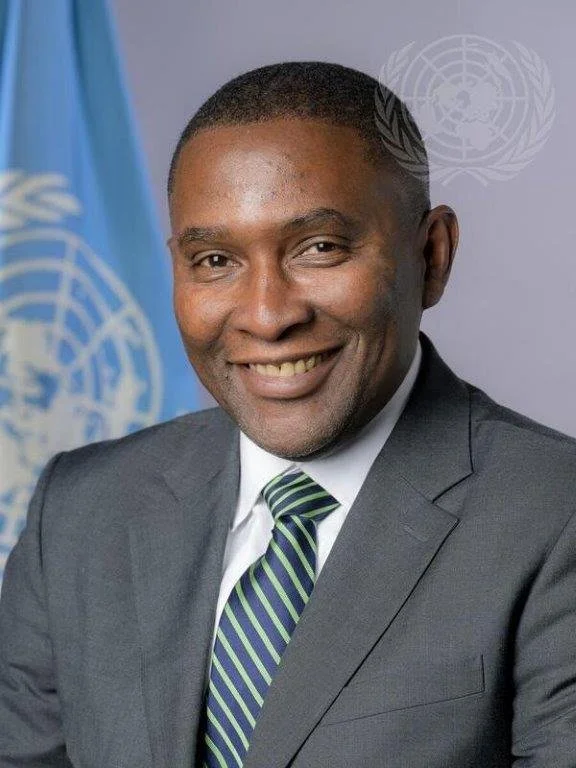
Special Adviser to the United Nations Secretary-General on Climate Action and Just Transition and Assistant Secretary-General of the Climate Action Team
The Special Adviser ensures delivery of the Secretary-General’s priorities on climate change. This includes mobilizing and securing enhanced international climate ambition to achieve the Paris Agreement and the Sustainable Development Goals, namely through; nationally determined contributions; supporting a just energy transition through accelerated fossil fuel and coal phase-out and renewables deployment; ensuring the public and private finance shifts required to underpin mitigation and adaptation action especially to developing countries; and furthering credible climate action by non-state actors. The Special Advisor also the coordinates UN System’s climate activities on behalf of the Secretary-General.
Prior to his appointment, Mr. Hart served as the Executive Director for the Caribbean region on the Board of the Inter-American Development Bank. From 2016 to 2018, Mr. Hart was the Ambassador to the United States and Permanent Representative at Organization of American States for Barbados. Before that, he was Director of Secretary-General Ban-Ki Moon’s Climate Change Support Team, leading delivery of the 2014 Climate Summit and the Secretary-General’s engagements on climate leading to the adoption and signing of the Paris Agreement.
Throughout his career, Mr. Hart has served in several climate action leadership positions, including as a Climate Adviser for the Caribbean Development Bank, Chief Climate Change Negotiator for Barbados, as well as the Coordinator and Lead Negotiator on Finance for the Alliance of Small Island Developing States, a coalition of 43 islands and low-lying coastal States in the Caribbean, Pacific, Africa, Indian Ocean and South China Sea. He was a member of the Kyoto Protocol Adaptation Fund Board from 2009 to 2010 and was elected by the United Nations General Assembly to serve as Vice-Chair of the Second Committee of the United Nations General Assembly (Economic and Financial) during its sixtieth Session.